Traveling with Bearded Dragons How to Keep Them Safe
In this article
A relocation can look simple until the bearded dragon is sitting in a carrier, the car is loading in direct sun, and traffic turns a short drive into an unpredictable heat problem. Dogs and cats can often move around a vehicle, but a bearded dragon depends on external conditions to regulate its body temperature. Traveling with bearded dragons is therefore a temperature-control task first, and a comfort task second.
The safest plan reduces temperature swings, limits stimulation, prevents the carrier from moving, and keeps handling to a minimum. Ground transport often gives owners more control than air travel, but only when the vehicle, carrier, route, stops, and hygiene routine are planned together.
Table of Contents
- Why Traveling With Bearded Dragons Is Different
- Pre Trip Vet Check and Travel Readiness
- Choosing and Securing the Right Carrier
- Managing Temperature and Humidity on the Road
- Ground Transport Versus Flying With Your Dragon
- Arrival Re Acclimation and Safe Handling Tips
Why Traveling With Bearded Dragons Is Different
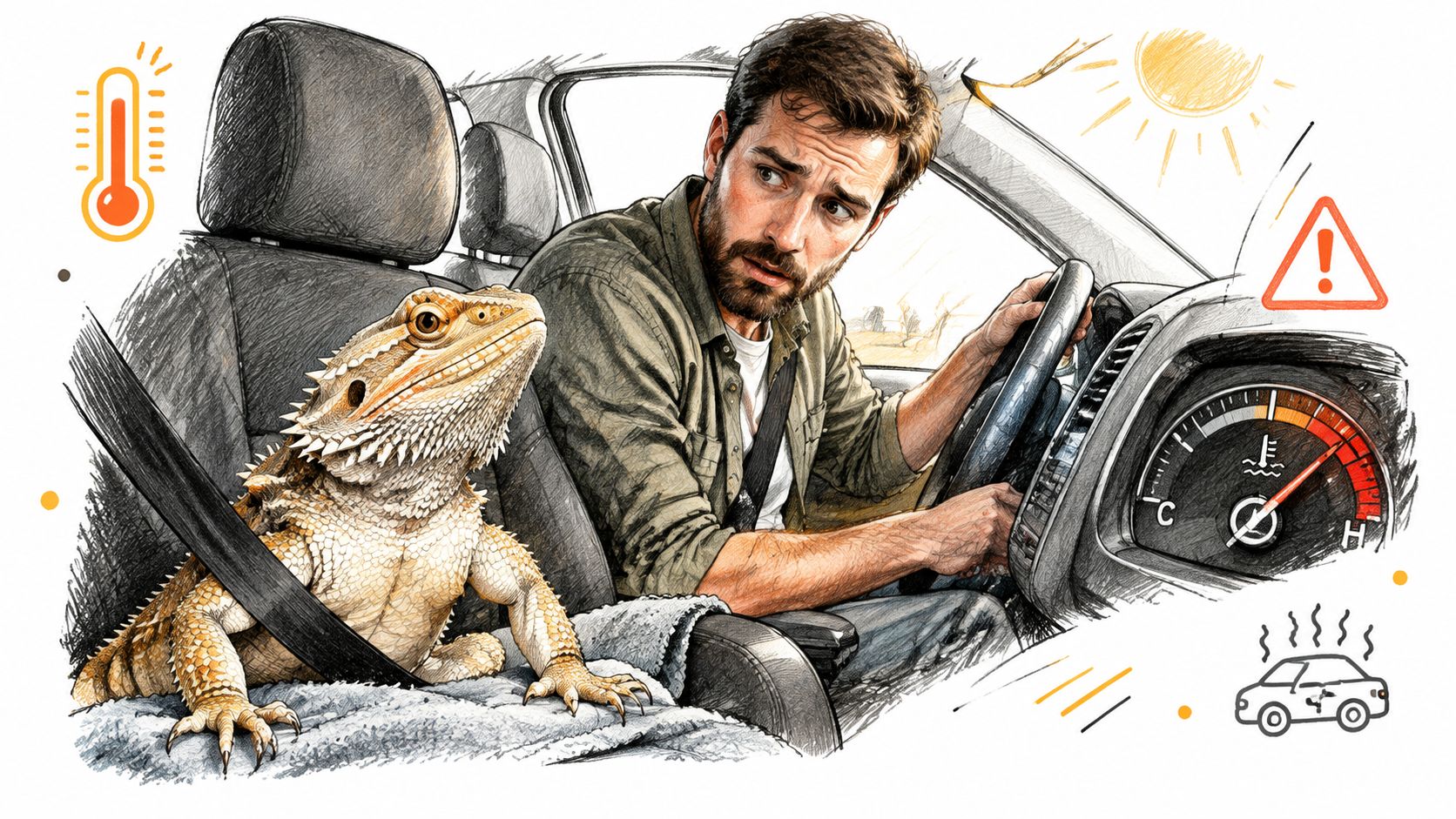
A bearded dragon is an ectothermic reptile. It depends on surrounding conditions to regulate body temperature, so travel is first a temperature-control problem, then a comfort problem. A dog can pant, change position, or seek a cooler part of the cabin. A dragon has fewer ways to escape a dangerous environment, particularly in a carrier placed in direct sun or beside an uncontrolled heat source.
Travel guidance places the carrier's target zone at roughly 24 to 28°C, or 75 to 82°F (reptile travel safety guidance). It also warns that a dragon may absorb in about 10 minutes the thermal stress a mammal might tolerate for 10 hours in a hot car or sun-exposed vehicle. Loading delays, roadside stops, and parked vehicles therefore require the same planning as the driving itself.
Practical rule: Keep the carrier shaded, ventilated, secured, and measurable throughout the journey. A soft blanket or familiar accessory cannot correct unstable heat.
Ground transport usually gives the driver more control over the cabin, avoids airport handoffs, and allows stops in sheltered places. Its trade-offs are real. Long drives create repeated chances for temperature drift, carrier movement, feeding-related regurgitation, and contact with contaminated surfaces. A spilled drink, dirty footwell, or soiled liner can turn a manageable trip into a hygiene problem.
The carrier should be a stable, dark, low-stimulation space, not a miniature enclosure crowded with loose equipment. A dependable plan accounts for the animal's health, carrier setup, vehicle conditions, temperature monitoring, and quiet re-acclimation after arrival. That order matters because a comfortable-looking carrier is still unsafe if its internal temperature is unknown or unstable.
Pre Trip Vet Check and Travel Readiness
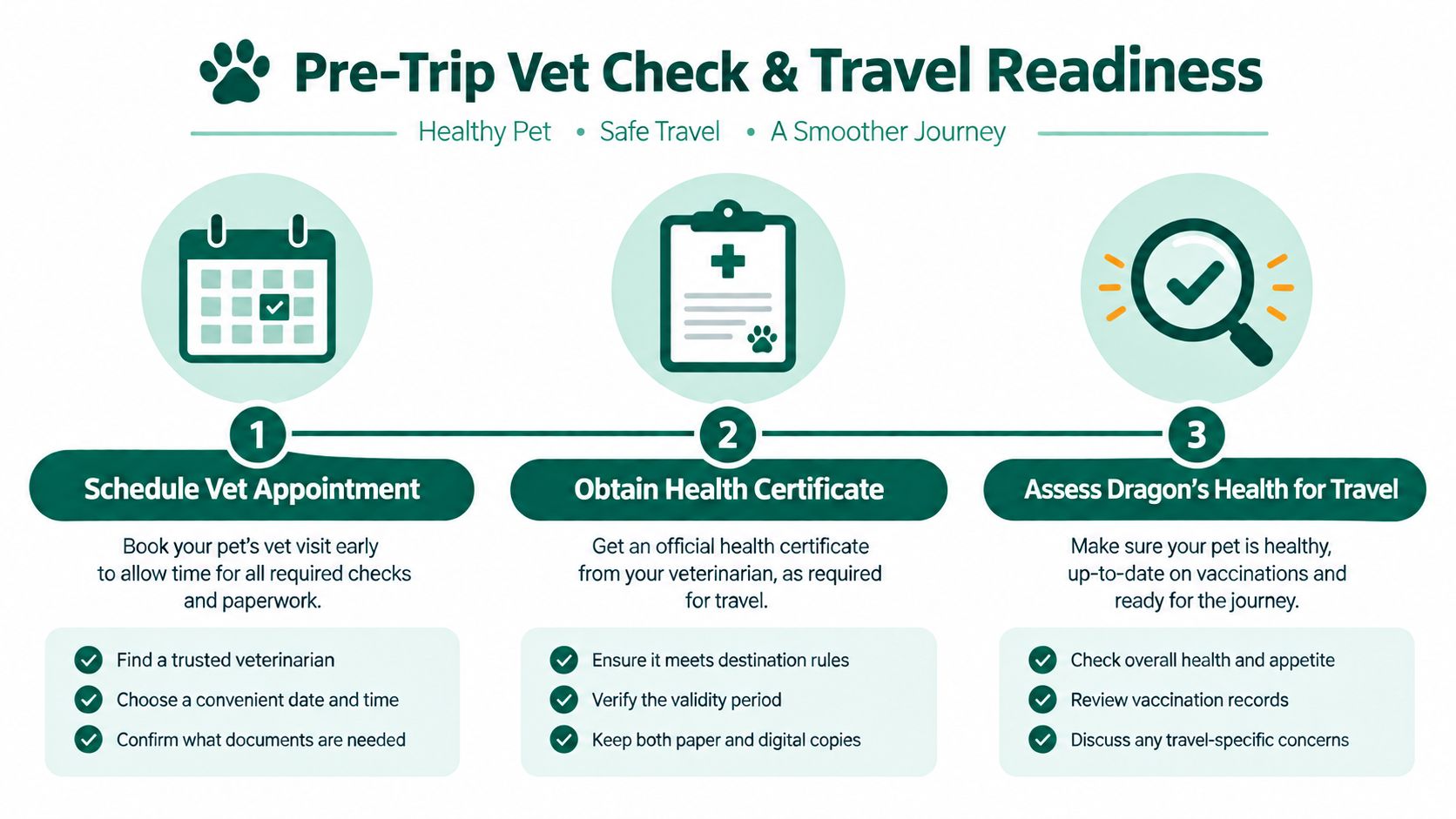
A dragon can look normal at home and still be a poor travel candidate. Before a long, cross-state, or professionally arranged trip, schedule a veterinary assessment covering weight, hydration, breathing, alertness, skin, limbs, and signs of illness that road stress could worsen. Unusual lethargy, repeated regurgitation, breathing difficulty, or poor hydration should pause the departure until the veterinarian gives direction.
Schedule health and paperwork early
Paperwork depends on the route and receiving location. Some ground journeys require an official health certificate, while a carrier or transport provider may request veterinary records before accepting the animal. Confirm requirements with the relevant authorities, destination, and driver. A state line does not guarantee that reptile-specific rules are absent.
Keep the documents together:
- Health certificate: Carry the veterinarian-approved certificate when the route or receiving party requires it. This pet transport health certificate guide explains the certificate's purpose and handling.
- Medical records: Include recent examination notes, current medications, and the veterinarian's contact details.
- Care instructions: Write the usual enclosure temperature routine, feeding pattern, hydration method, and emergency preferences in plain language.
- Identification details: Record the dragon's name, appearance, sex if known, and owner contact information.
Reduce digestive stress
Feed timing affects more than appetite. A large meal shortly before departure raises the chance of regurgitation when the dragon is moved and exposed to road vibration. Reptile travel guidance recommends avoiding a large pre-trip meal and notes that a few hours of travel is generally manageable with warmth and calm. Longer journeys require planned temperature checks and sheltered breaks (transport and travel stress guidance).
Ask the veterinarian how to manage feeding and hydration for the individual dragon, especially if it has a medical condition, is underweight, or is refusing food. Water dishes commonly spill in a moving carrier and can change its humidity. Use a deliberate hydration plan instead of improvising during a roadside stop.
Before loading, check the dragon and the equipment once more. A clean liner, readable care notes, and accessible records reduce handling when conditions are already changing.
Choosing and Securing the Right Carrier
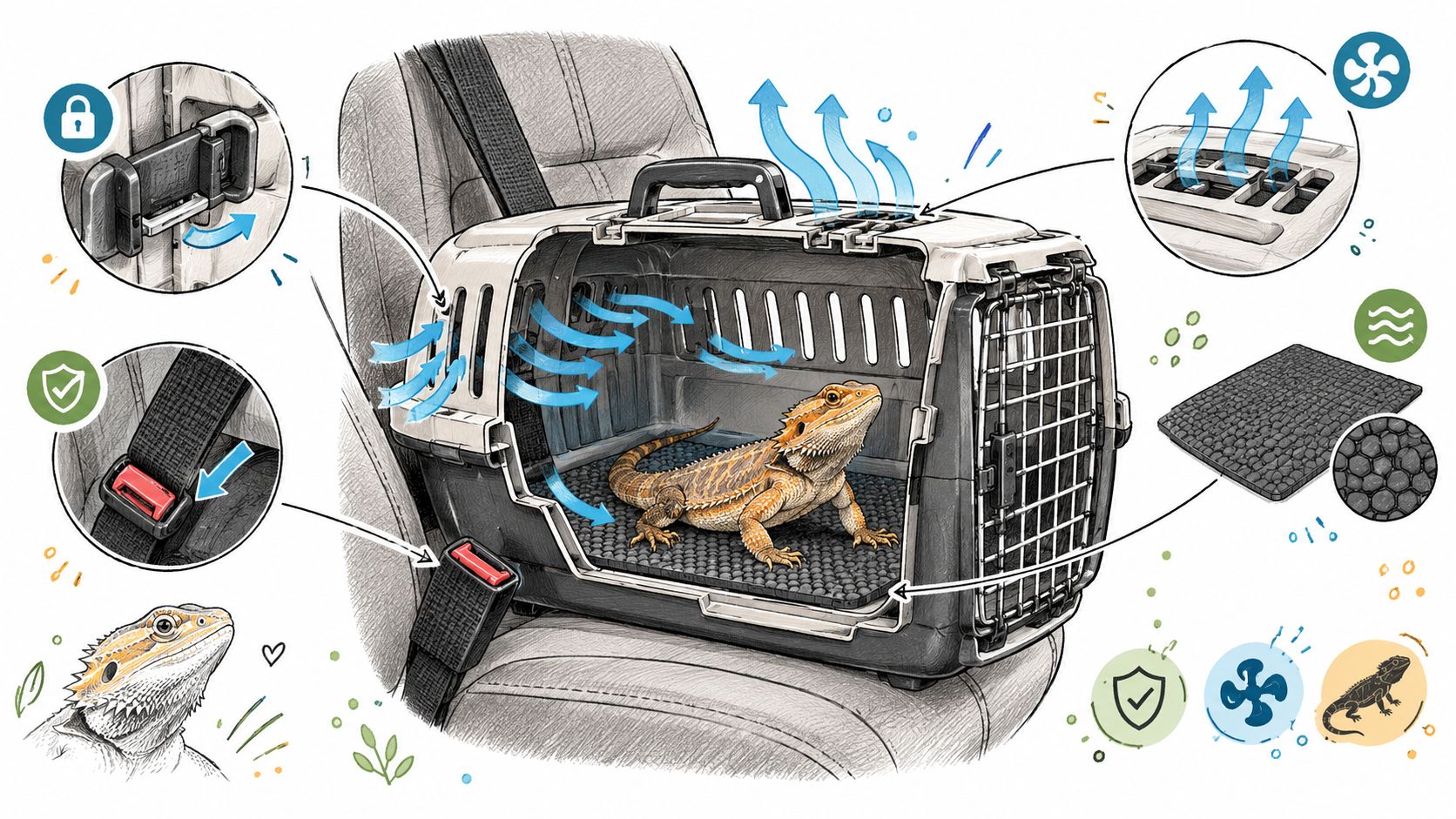
A carrier has to control movement, airflow, visibility, and cleanup at the same time. Choose one that is rigid, ventilated, opaque, and appropriately sized. Fabric bags can collapse around the dragon or expose it to constant movement outside the vehicle. Excess interior space lets the animal slide during braking and turns, while loose objects can cause impact or entanglement injuries.
Use a snug rigid box with enough room for the dragon to lie securely without being thrown from side to side. Remove loose substrate before departure. Particles can reach the mouth or eyes, and spilled waste becomes harder to remove once the vehicle is moving. A smooth, washable base also limits hygiene problems when a liner is soiled.
Build a low-stimulation interior
Cover the bottom with a towel or soft cloth that gives the dragon traction. Lay it flat, without loops, folds, or loose edges that could catch claws. Keep a spare towel in the travel kit rather than inside the carrier. That lets you replace a dirty liner without adding clutter or handling the dragon repeatedly.
Opaque sides block passing traffic, unfamiliar faces, and shifting light. Do not cover the ventilation openings, since restricted airflow can make the carrier unsafe even when the vehicle itself feels comfortable. The interior should stay quiet and functional. Decorative items have no travel benefit.
Avoid placing these items inside the carrier:
- Loose substrate: It shifts beneath the dragon, absorbs waste, and complicates cleaning.
- Unsecured heat sources: Heat packs, hot rocks, and heating devices can burn the dragon when it cannot move away.
- Heavy accessories: Bowls, décor, and hard objects can become projectiles during sudden braking.
- Open water containers: Spills soak the liner and leave the dragon on a wet, unstable surface.
Secure the box before loading
Secure the carrier so it cannot slide, tip, or rotate. A seatbelt can hold a properly sized rigid box against the seat, provided the belt does not cover ventilation openings or deform the carrier. Keep it off the dashboard and away from any position where an airbag could strike it.
Place the box out of direct sun and away from strong air vents. The passenger seat may make monitoring easier, but it is unsuitable if sunlight reaches the carrier or the box interferes with vehicle safety systems. The same restraint principles used in this guide to transporting a bird apply here, with adjustments for a dragon's need for a dark, stable enclosure. Check the carrier after the first stops, because belt tension and vehicle movement can shift its position.
Managing Temperature and Humidity on the Road
A bearded dragon can look settled while its carrier temperature drifts into an unsafe range. Treat ground travel as a temperature-control task first. Warm the vehicle before loading in cool weather, and pre-cool it during hot weather. Aim for a holding zone of roughly 24 to 28°C, or 75 to 82°F, while preserving warmer and cooler areas when the carrier setup permits (reptile transport heat guidance).
Use a digital thermometer rather than your hand. Position the probe to measure the air inside the carrier without touching the dragon or a heated surface. Check it after loading, whenever the weather changes sharply, and at planned sheltered stops. A single reading at departure cannot account for sun, traffic, or a change in the vehicle's airflow.
Create controlled warmth
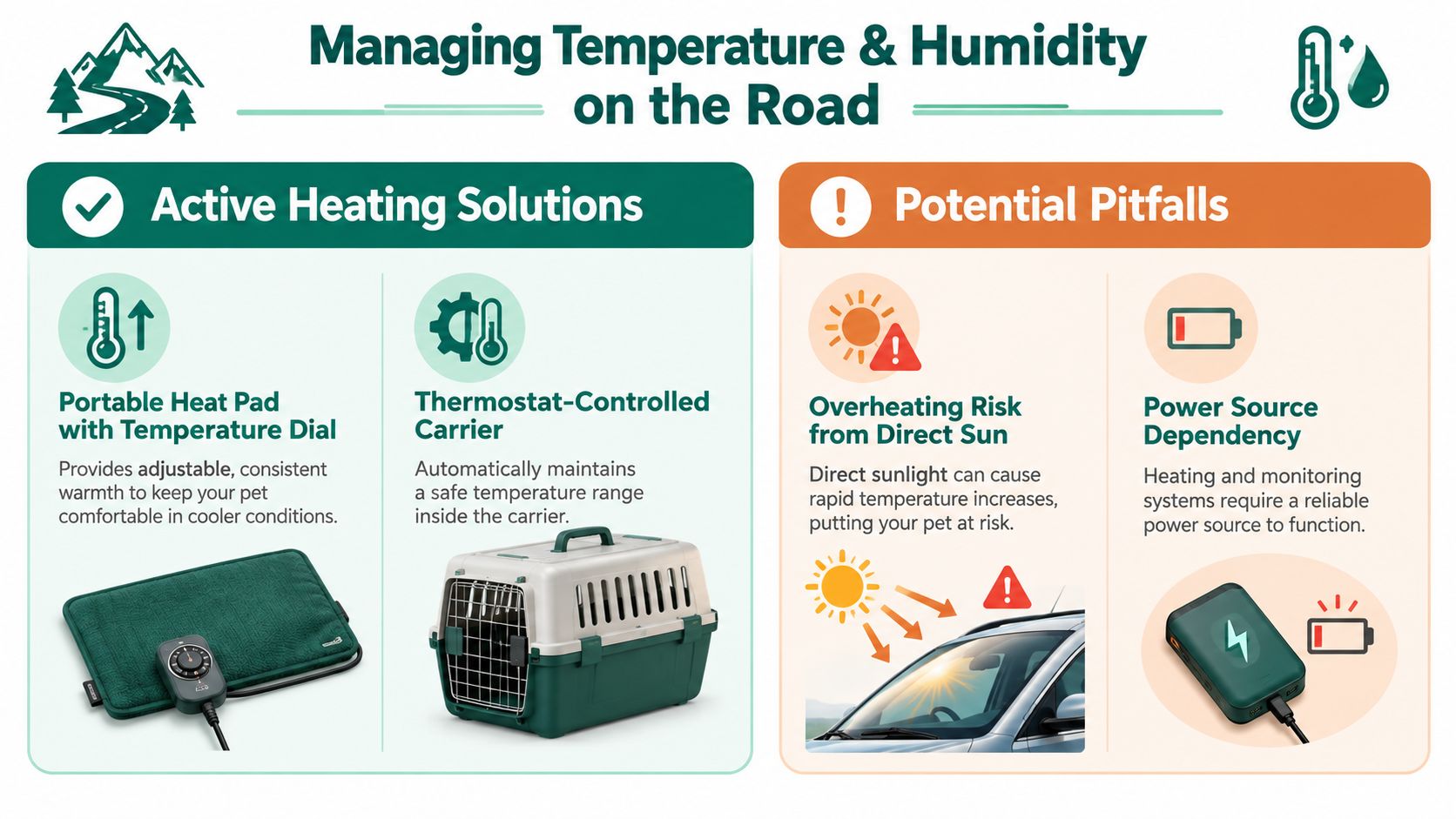
Cold-weather transport may require an external heat pack. Wrap it and place it outside the dragon's direct contact area, leaving a cooler section available for retreat. A pack inside the carrier can burn the animal or raise the entire enclosure to an unsafe temperature.
Keep loose heating devices, hot rocks, and unsecured pads out of the carrier. A powered heating system requires dependable temperature control, firm placement, and a plan for power loss. Common hot packs may last about 8 hours, while longer-duration packs may last up to 72 hours when used externally with ventilation (seasonal reptile transport guidance). Check the temperature rather than relying on the pack's stated duration.
Adapt the route to the season
In summer, use shade, strong air conditioning, and departures during the cooler part of the day. Early morning can reduce temperature swings. In winter, midday travel often gives the vehicle time to warm before loading and avoids the sharpest evening cold (reptile travel safety guidance).
A parked car is not a climate-control plan. Sunlight can heat the carrier rapidly even when outdoor air feels moderate, and leaving the dragon inside during a roadside stop creates a separate risk. Stop only where the carrier can remain in a sheltered environment, then check its temperature without unnecessary handling.
Humidity is usually secondary for bearded dragons, but hygiene still matters. Wet liners, spilled water, and condensation leave the animal on a damp surface and allow waste to spread through the carrier. Keep the interior dry, avoid misting during the drive unless a veterinarian directed it, and restore the dragon's usual care routine after arrival.
<iframe width="100%" style="aspect-ratio: 16 / 9;" src="https://www.youtube.com/embed/KNm69JutV08" frameborder="0" allow="autoplay; encrypted-media" allowfullscreen></iframe>Ground Transport Versus Flying With Your Dragon
A flight may take less time on paper, yet the dragon's environment passes through more hands and control points. Airline rules also vary. Many airlines do not allow reptiles in the cabin, while some accept them only through cargo or checked-baggage procedures (air travel guidance for bearded dragons).
The practical comparison is straightforward:
| Ground vehicle transport | Airline transport |
|---|---|
| Direct control over cabin temperature and carrier placement | Temperature conditions may depend on airline handling and cargo procedures |
| Door-to-door movement with fewer handoffs | Airport check-in, transfers, and collection add handling points |
| Route flexibility for planned sheltered stops | Carrier dimensions, weight, and airline embargoes can restrict options |
| Easier to keep the dragon in a stable, opaque carrier | Cabin access is not consistently available for reptiles |
Ground travel makes temperature management easier to monitor. The driver can keep the carrier secured inside the vehicle, limit unnecessary exposure during loading, and respond when conditions change. That control comes with a hygiene obligation. Roadside stops, shared vehicle surfaces, dirty liners, and spilled water can spread waste through the carrier or onto equipment used for another animal. Use a clean, dedicated setup and replace soiled materials before they remain in contact with the dragon.
Air travel can suit a relocation when driving is impractical, but the owner must confirm the airline's current reptile policy before booking. Requirements may cover carrier construction, documentation, routing, and whether the animal travels in the cabin or cargo system. A policy that accepts one type of reptile or one route does not guarantee acceptance for every booking.
For a short move, driving personally usually gives the clearest oversight. For a longer relocation, ground animal transport services can connect owners with independent drivers and let them review schedules, driver details, and transport arrangements before booking.
Ferried's ground marketplace includes reptile transport, door-to-door vehicle travel, driver verification, GPS check-ins, photo updates, and payment held until confirmed delivery. These features improve communication during a long-distance move, but they do not replace a written temperature plan, clean equipment, or a carrier secured for the entire journey.
Arrival Re Acclimation and Safe Handling Tips
The first few minutes at the destination can expose a temperature problem quickly. Set up the enclosure before opening the carrier, with the warm and cool areas established and temperatures verified. Move the dragon directly into that controlled environment, then allow quiet time to re-acclimate before handling or feeding after a stressful journey.
Keep the first inspection calm and brief. Confirm that the dragon is upright, responsive, free of obvious injury, and moving normally. Travel can temporarily change appetite and behavior. Persistent weakness, breathing changes, repeated regurgitation, injury, or failure to resume normal basking behavior requires veterinary advice.
Treat hygiene as part of transport safety
Bearded dragons can carry Salmonella even when they look healthy. The CDC explains that germs may spread from droppings to the dragon's body and surrounding surfaces. People can become ill after touching the animal or its environment and then touching their mouth or food (CDC investigation of a bearded dragon outbreak).
Hygiene matters after arrival as much as during the drive, especially when children, older adults, or immunocompromised people share the vehicle or lodging.
- Set a handling boundary: Keep the dragon away from food preparation areas, hotel beds, kitchen surfaces, and children's play areas.
- Clean hands immediately: Anyone who touches the dragon, carrier, liner, or waste should wash their hands before eating or touching their face.
- Contain waste: Bag soiled towels and clean contaminated surfaces. Do not carry used materials loose in the vehicle or lodging.
- Limit handlers: One prepared adult should manage carrier access and the move into the enclosure whenever possible.
Watch the dragon after placement rather than repeatedly picking it up. Confirm that it can reach the temperature gradient and that its posture, basking, and activity gradually return to normal. If the enclosure is too cool, the dragon may remain inactive and fail to resume ordinary behavior. If it is too warm, provide access to the cool area and recheck the setup.
reptile transport and travel stress guidance offers additional guidance on reducing travel stress. Quiet containment, verified warmth, and clean handling make the transfer easier to assess and safer for people and animals.
Ferried connects pet owners with verified independent drivers for door-to-door ground transport across the United States, including reptile moves. For a long-distance relocation, review driver experience, trip updates, photo check-ins, and delivery protection at Ferried, then share the dragon's carrier and temperature requirements before booking.
Ready to transport your pet?
Post your transport request for free. Verified drivers bid for your trip, you pick the best offer.
Get free quotes